
Every decision about what to wear holds the power to communicate who you are long before you say a word. In fast-paced urban spaces, young adults crave more than trend cycles—they want streetwear that expresses their stories, values, and creative spirit. By exploring the dynamic nature of individuality in fashion, you discover how modern style choices help shape identity, invite cultural conversation, and carve out a space where true authenticity thrives.
Table of Contents
- Defining Individuality In Fashion Today
- Personal Expression Through Style Choices
- Impact Of Individuality On Fashion Trends
- Benefits Of Embracing Unique Fashion Identities
- Challenges And Myths Around Standing Out
Key Takeaways
| Point | Details |
|---|---|
| Personal Authenticity in Fashion | Fashion serves as a powerful tool for personal expression, allowing individuals to communicate their identity and stories through their clothing choices. |
| Social Media’s Role | Digital platforms have revolutionized how fashion individuality is expressed, especially among Generation Z, creating interactive personal style narratives. |
| Individuality and Trends | Personal style not only challenges mainstream aesthetics but actively shapes fashion trends, making individuality a key driver of contemporary fashion dynamics. |
| Benefits of Unique Fashion Identities | Embracing a distinctive style enhances self-confidence, emotional resilience, and personal empowerment, supporting broader psychological well-being. |
Defining Individuality in Fashion Today
Fashion today transcends mere clothing - it’s a powerful form of personal expression that communicates identity, values, and individual narratives. Contemporary fashion practices reveal complex identity dynamics through personal styling choices that go far beyond traditional trends.
The essence of fashion individuality now revolves around three fundamental dimensions:
- Personal Authenticity: Using clothing as a canvas for self-representation
- Cultural Dialogue: Communicating societal perspectives through style
- Generational Interpretation: Reflecting unique generational perspectives and experiences
Modern fashion individuality isn’t just about wearing unique clothing - it’s about crafting a visual language that speaks to personal experiences, social contexts, and emerging cultural narratives. Holistic fashion understanding incorporates social and ecological systems, recognizing that individual style is deeply interconnected with broader societal dynamics.
Social Media’s Role: Digital platforms have dramatically transformed how individuals conceptualize and express fashion individuality. Generation Z, in particular, leverages online spaces to curate and broadcast personal style narratives, turning fashion into a dynamic, interactive form of self-definition.
Key Characteristics of Contemporary Fashion Individuality:
- Fluid and adaptable personal expression
- Global cultural influences
- Technological integration
- Sustainability consciousness
- Personal storytelling through clothing choices
Fashion individuality in 2023 is less about following trends and more about creating personal statements that reflect complex, multifaceted identities.
Pro tip: Embrace your unique style by experimenting with clothing that genuinely resonates with your personal narrative, rather than simply mimicking external trends.
Personal Expression Through Style Choices
Personal style is a powerful form of non-verbal communication that allows individuals to articulate complex narratives about themselves without uttering a single word. Fashion serves as a critical vehicle for self-expression, enabling people to communicate personality, values, and emotional states through deliberate clothing choices.
The psychological landscape of style choices encompasses multiple intricate dimensions:
- Emotional Representation: Using clothing to reflect inner emotional states
- Cultural Identity: Expressing heritage and personal background
- Social Positioning: Communicating professional and personal status
- Personal Creativity: Showcasing individual artistic sensibilities
Fashion psychology reveals how clothing choices reflect personality, demonstrating that style is far more than aesthetic preference. It’s a complex language of self-interpretation, influenced by personal experiences, cultural norms, and individual creativity.
Individuals strategically leverage style choices across different contexts:
Here’s a summary of how style expression varies by context:
| Context | Typical Fashion Goal | Impact on Identity |
|---|---|---|
| Professional | Show competence, adapt style | Strengthens self-assurance |
| Social Gatherings | Express confidence, belong | Builds group connections |
| Personal Spaces | Prioritize authenticity | Deepens self-understanding |
| Digital Platforms | Curate visual narrative | Expands social influence |
- Professional environments: Communicating competence and adaptability
- Social gatherings: Signaling group affiliations and personal confidence
- Personal spaces: Expressing authentic self without external constraints
- Digital platforms: Crafting carefully curated personal narratives
Psychological Dimensions of Style Selection:
- Subconscious identity projection
- Emotional armor and protection
- Personal empowerment mechanism
- Social communication tool
Personal style is not about following trends, but about creating a unique visual language that speaks authentically to one’s inner world.
Pro tip: Develop your personal style by experimenting with clothing that makes you feel confident and genuine, rather than trying to conform to external expectations.
Impact of Individuality on Fashion Trends
The paradox of individuality in fashion consumption reveals a complex relationship between personal expression and broader social trends. Individual style choices simultaneously challenge and contribute to mainstream fashion narratives, creating a dynamic ecosystem of creative personal representation.
The key mechanisms through which individuality influences fashion trends include:
- Disruption of Conventional Patterns: Challenging established aesthetic norms
- Micro-trend Generation: Creating localized style movements
- Personal Branding: Establishing unique visual identities
- Cultural Reinterpretation: Reimagining traditional fashion contexts
Digital platforms mediate individual fashion influences, transforming how personal style impacts broader trends. Social media influencers and everyday consumers now play crucial roles in trend creation, democratizing fashion evolution beyond traditional industry gatekeepers.
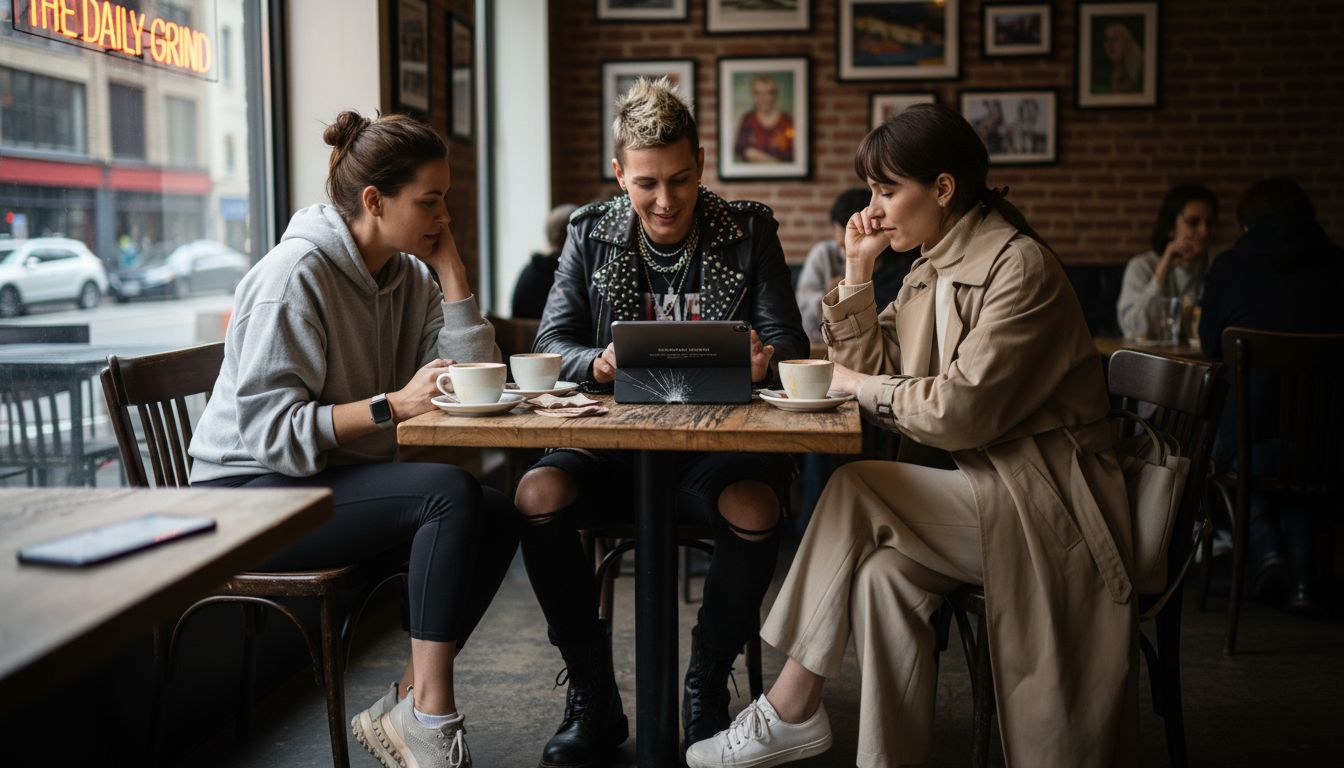
The contemporary fashion landscape demonstrates several critical transformations driven by individual expression:
See how individuality influences mainstream fashion trends:
| Influence Mechanism | Effect on Trends | Example Outcome |
|---|---|---|
| Micro-trend Generation | Sparks new localized fashions | Niche aesthetics gain popularity |
| Personal Branding | Diversifies visuals in media | Unique styles reach wider reach |
| Cultural Reinterpretation | Revives or re-contextualizes past looks | Vintage returns, new meanings |
- Increased diversity in aesthetic representation
- Rapid trend acceleration through digital platforms
- Blurring boundaries between consumer and creator
- Personalized style as a form of cultural communication
Trend Emergence Mechanisms:
- Bottom-up innovation
- Viral style propagation
- Algorithmic trend detection
- Community-driven aesthetic shifts
Individuality is no longer a deviation from fashion trends - it has become the primary engine driving their continuous transformation.
Pro tip: Embrace your unique style perspective as a potential trendsetter, understanding that authentic personal expression can meaningfully influence broader fashion movements.
Benefits of Embracing Unique Fashion Identities
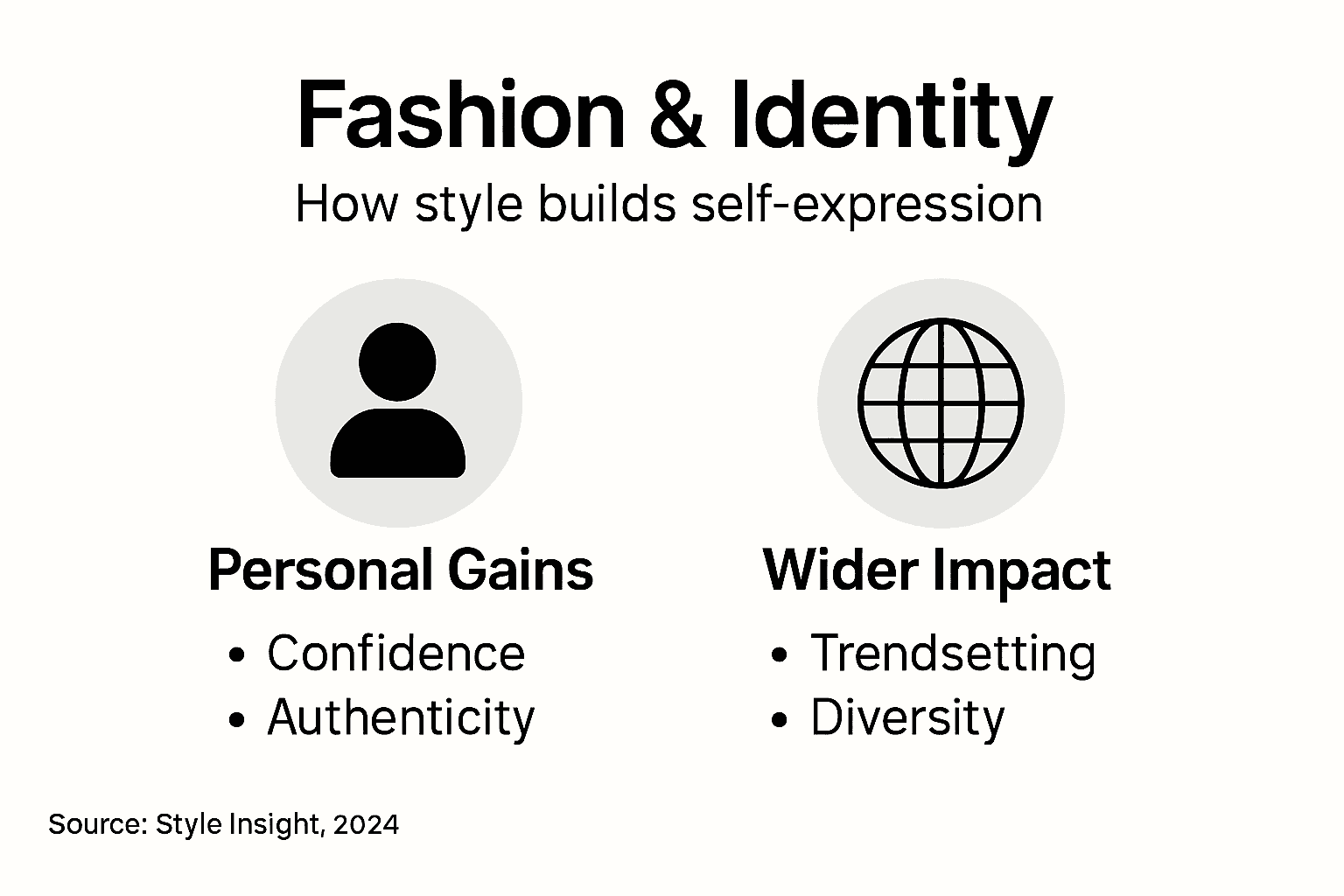
Psychological characteristics of individual style reveal profound connections between authentic self-expression and personal well-being. Embracing a unique fashion identity goes far beyond aesthetic choices, representing a powerful mechanism for self-discovery, emotional resilience, and personal empowerment.
The core benefits of cultivating a distinctive style include:
- Psychological Liberation: Breaking free from societal conformity pressures
- Enhanced Self-Confidence: Developing a strong sense of personal authenticity
- Emotional Resilience: Creating a protective personal narrative
- Creative Self-Exploration: Experimenting with personal identity representation
Fashion as a cultural identity expression enables individuals to navigate complex global landscapes while maintaining personal uniqueness. By rejecting homogenized fashion standards, people can craft nuanced representations of their multifaceted identities.
Unique fashion identities provide transformative advantages across multiple life domains:
- Professional differentiation and personal branding
- Enhanced social interactions and connection opportunities
- Psychological protection against external pressures
- Increased personal creativity and self-understanding
Psychological Dimensions of Unique Style:
- Internal coherence
- Emotional authenticity
- Social adaptability
- Cultural resilience
Unique fashion identities are not about standing out - they’re about standing true to oneself in a world of constant external influences.
Pro tip: Develop your personal style as an ongoing journey of self-discovery, allowing your clothing choices to reflect your evolving personal narrative.
Challenges and Myths Around Standing Out
Youth fashion identity involves complex negotiations between personal expression and social expectations. Standing out isn’t about radical rejection of mainstream aesthetics, but about crafting a nuanced, authentic personal narrative that reflects individual complexity.
Common myths surrounding individual style include:
- Conformity Myth: Believing uniqueness requires total rejection of trends
- Expense Fallacy: Thinking distinctive style demands significant financial investment
- Comfort Compromise: Assuming personal style sacrifices comfort
- Social Risk Perception: Fearing social judgment for non-traditional choices
Fashion inclusivity challenges traditional standing out paradigms, demonstrating that individuality is not about extreme differentiation but meaningful self-representation. Modern style movements increasingly celebrate diversity and personal interpretation.
Key psychological barriers to embracing individual style involve:
- Fear of social rejection
- Limited self-confidence
- Internalized conformity pressures
- Lack of style exploration skills
Myth-Busting Style Strategies:
- Gradual personal style evolution
- Modest, strategic differentiation
- Confidence-building experimentation
- Authentic self-expression
Standing out is less about looking different and more about feeling authentically you.
Pro tip: Start small with style experiments, introducing unique elements gradually to build confidence in your personal fashion identity.
Elevate Your Personal Style with DRYX Fashion
The article highlights that true individuality in fashion is about creating authentic personal statements that reflect your unique identity and values. Many struggle with expressing themselves confidently while avoiding the common myths of style or the fear of social rejection. If you want to break free from conformity, build authentic self-confidence, and craft a visual language that speaks your inner world DRYX offers a curated selection of modern, stylish clothing tailored for those who value sophistication and uniqueness.

Discover graphic T-shirts, sweatshirts, and hoodies designed to help you stand true to yourself while enjoying high-quality comfort. Start expressing your evolving narrative today with pieces that empower your creativity and tell your story. Visit Explore DRYX’s Collection to find your perfect style match and redefine what fashion individuality means for you. Don’t wait: your unique style statement awaits at DRYX online shop.
Frequently Asked Questions
How does fashion individuality impact personal identity?
Fashion individuality allows individuals to express their unique narratives, values, and emotions through clothing choices, effectively communicating their identity to the world.
What are the key characteristics of contemporary fashion individuality?
Key characteristics include fluid personal expression, global cultural influences, technological integration, sustainability consciousness, and personal storytelling through clothing choices.
How can someone develop their personal fashion style?
To develop a personal style, individuals should experiment with clothing that resonates with their personal narrative, emphasizing comfort and authenticity over mere trends.
What psychological benefits are associated with embracing a unique fashion identity?
Embracing a unique fashion identity can lead to enhanced self-confidence, psychological liberation from societal pressures, emotional resilience, and opportunities for creative self-exploration.